68 posts tagged “mistral”
Mistral AI release both openly licensed and API-hosted Language Models.
2024
Mixtral of Experts. The Mixtral paper is out, exactly a month after the release of the Mixtral 8x7B model itself. Thanks to the paper I now have a reasonable understanding of how a mixture of experts model works: each layer has 8 available blocks, but a router model selects two out of those eight for each token passing through that layer and combines their output. “As a result, each token has access to 47B parameters, but only uses 13B active parameters during inference.”
The Mixtral token context size is an impressive 32k, and it compares extremely well against the much larger Llama 70B across a whole array of benchmarks.
Unsurprising but disappointing: there’s nothing in the paper at all about what it was trained on.
2023
Many options for running Mistral models in your terminal using LLM
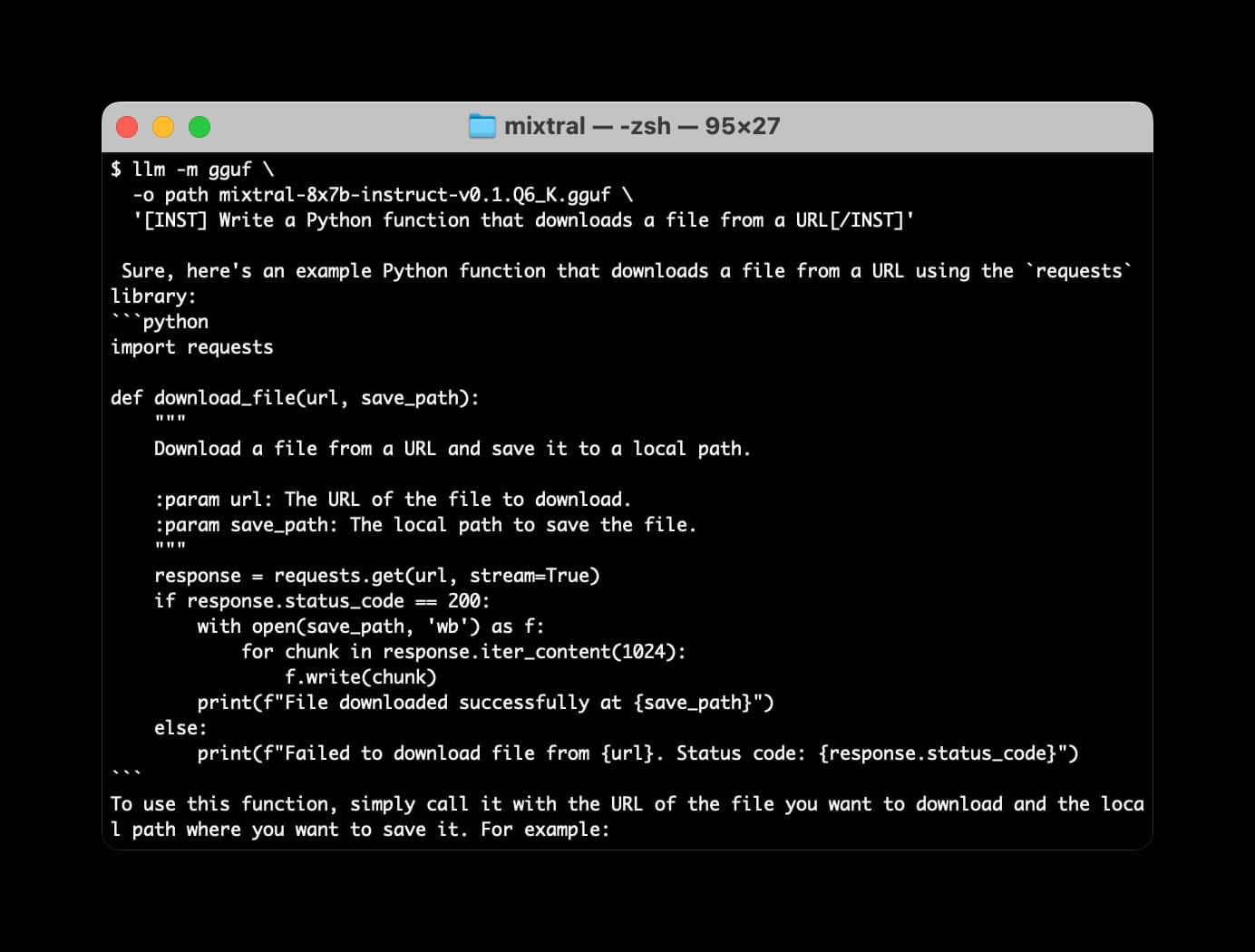
Mistral AI is the most exciting AI research lab at the moment. They’ve now released two extremely powerful smaller Large Language Models under an Apache 2 license, and have a third much larger one that’s available via their API.
[... 2,063 words]Mixtral of experts (via) Mistral have firmly established themselves as the most exciting AI lab outside of OpenAI, arguably more exciting because much of their work is released under open licenses.
On December 8th they tweeted a link to a torrent, with no additional context (a neat marketing trick they’ve used in the past). The 87GB torrent contained a new model, Mixtral-8x7b-32kseqlen—a Mixture of Experts.
Three days later they published a full write-up, describing “Mixtral 8x7B, a high-quality sparse mixture of experts model (SMoE) with open weights”—licensed Apache 2.0.
They claim “Mixtral outperforms Llama 2 70B on most benchmarks with 6x faster inference”—and that it outperforms GPT-3.5 on most benchmarks too.
This isn’t even their current best model. The new Mistral API platform (currently on a waitlist) refers to Mixtral as “Mistral-small” (and their previous 7B model as “Mistral-tiny”—and also provides access to a currently closed model, “Mistral-medium”, which they claim to be competitive with GPT-4.
llamafile is the new best way to run an LLM on your own computer
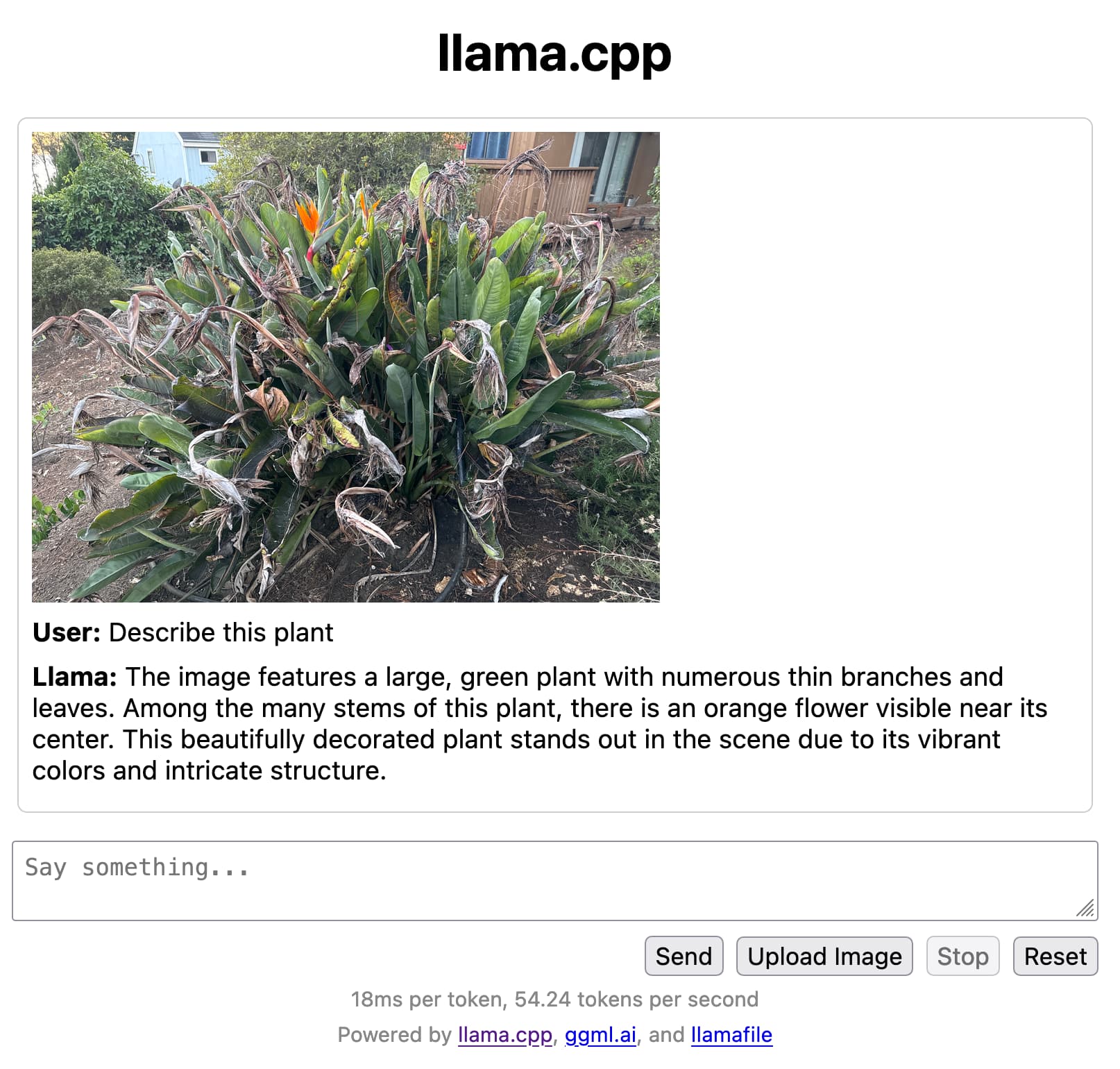
Mozilla’s innovation group and Justine Tunney just released llamafile, and I think it’s now the single best way to get started running Large Language Models (think your own local copy of ChatGPT) on your own computer.
[... 650 words]MonadGPT (via) “What would have happened if ChatGPT was invented in the 17th century? MonadGPT is a possible answer.
MonadGPT is a finetune of Mistral-Hermes 2 on 11,000 early modern texts in English, French and Latin, mostly coming from EEBO and Gallica.
Like the original Mistral-Hermes, MonadGPT can be used in conversation mode. It will not only answer in an historical language and style but will use historical and dated references.”
The EU AI Act now proposes to regulate “foundational models”, i.e. the engine behind some AI applications. We cannot regulate an engine devoid of usage. We don’t regulate the C language because one can use it to develop malware. Instead, we ban malware and strengthen network systems (we regulate usage). Foundational language models provide a higher level of abstraction than the C language for programming computer systems; nothing in their behaviour justifies a change in the regulatory framework.
— Arthur Mensch, Mistral AI