April 2025
155 posts: 12 entries, 50 links, 26 quotes, 12 notes, 48 beats, 7 newsletters
Friday, 18th April 2025
Image segmentation using Gemini 2.5

Max Woolf pointed out this new feature of the Gemini 2.5 series (here’s my coverage of 2.5 Pro and 2.5 Flash) in a comment on Hacker News:
[... 1,428 words]To me, a successful eval meets the following criteria. Say, we currently have system A, and we might tweak it to get a system B:
- If A works significantly better than B according to a skilled human judge, the eval should give A a significantly higher score than B.
- If A and B have similar performance, their eval scores should be similar.
Whenever a pair of systems A and B contradicts these criteria, that is a sign the eval is in “error” and we should tweak it to make it rank A and B correctly.

It frustrates me when support sites for online services fail to link to the things they are talking about. Cloudflare's Find zone and account IDs page for example provides a four step process for finding my account ID that starts at the root of their dashboard, including a screenshot of where I should click.
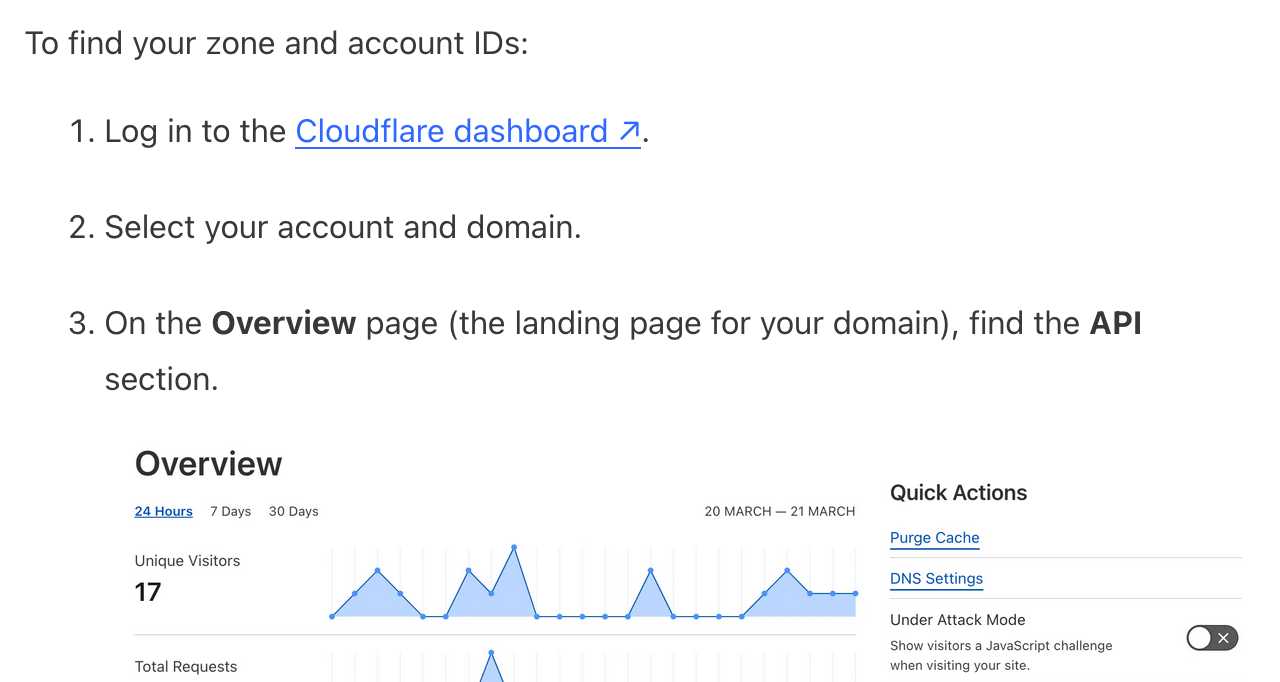
In Cloudflare's case it's harder to link to the correct dashboard page because the URL differs for different users, but that shouldn't be a show-stopper for getting this to work. Set up dash.cloudflare.com/redirects/find-account-id and link to that!
... I just noticed they do have a mechanism like that which they use elsewhere. On the R2 authentication page they link to:
https://dash.cloudflare.com/?to=/:account/r2/api-tokens
The "find account ID" flow presumably can't do the same thing because there is no single page displaying that information - it's shown in a sidebar on the page for each of your Cloudflare domains.
Saturday, 19th April 2025
Gemma 3 QAT Models. Interesting release from Google, as a follow-up to Gemma 3 from last month:
To make Gemma 3 even more accessible, we are announcing new versions optimized with Quantization-Aware Training (QAT) that dramatically reduces memory requirements while maintaining high quality. This enables you to run powerful models like Gemma 3 27B locally on consumer-grade GPUs like the NVIDIA RTX 3090.
I wasn't previously aware of Quantization-Aware Training but it turns out to be quite an established pattern now, supported in both Tensorflow and PyTorch.
Google report model size drops from BF16 to int4 for the following models:
- Gemma 3 27B: 54GB to 14.1GB
- Gemma 3 12B: 24GB to 6.6GB
- Gemma 3 4B: 8GB to 2.6GB
- Gemma 3 1B: 2GB to 0.5GB
They partnered with Ollama, LM Studio, MLX (here's their collection) and llama.cpp for this release - I'd love to see more AI labs following their example.
The Ollama model version picker currently hides them behind "View all" option, so here are the direct links:
- gemma3:1b-it-qat - 1GB
- gemma3:4b-it-qat - 4GB
- gemma3:12b-it-qat - 8.9GB
- gemma3:27b-it-qat - 18GB
I fetched that largest model with:
ollama pull gemma3:27b-it-qat
And now I'm trying it out with llm-ollama:
llm -m gemma3:27b-it-qat "impress me with some physics"
I got a pretty great response!
Update: Having spent a while putting it through its paces via Open WebUI and Tailscale to access my laptop from my phone I think this may be my new favorite general-purpose local model. Ollama appears to use 22GB of RAM while the model is running, which leaves plenty on my 64GB machine for other applications.
I've also tried it via llm-mlx like this (downloading 16GB):
llm install llm-mlx
llm mlx download-model mlx-community/gemma-3-27b-it-qat-4bit
llm chat -m mlx-community/gemma-3-27b-it-qat-4bit
It feels a little faster with MLX and uses 15GB of memory according to Activity Monitor.
Claude Code: Best practices for agentic coding (via) Extensive new documentation from Anthropic on how to get the best results out of their Claude Code CLI coding agent tool, which includes this fascinating tip:
We recommend using the word "think" to trigger extended thinking mode, which gives Claude additional computation time to evaluate alternatives more thoroughly. These specific phrases are mapped directly to increasing levels of thinking budget in the system: "think" < "think hard" < "think harder" < "ultrathink." Each level allocates progressively more thinking budget for Claude to use.
Apparently ultrathink is a magic word!
I was curious if this was a feature of the Claude model itself or Claude Code in particular. Claude Code isn't open source but you can view the obfuscated JavaScript for it, and make it a tiny bit less obfuscated by running it through Prettier. With Claude's help I used this recipe:
mkdir -p /tmp/claude-code-examine
cd /tmp/claude-code-examine
npm init -y
npm install @anthropic-ai/claude-code
cd node_modules/@anthropic-ai/claude-code
npx prettier --write cli.js
Then used ripgrep to search for "ultrathink":
rg ultrathink -C 30
And found this chunk of code:
let B = W.message.content.toLowerCase();
if (
  B.includes("think harder") ||
  B.includes("think intensely") ||
  B.includes("think longer") ||
  B.includes("think really hard") ||
  B.includes("think super hard") ||
  B.includes("think very hard") ||
  B.includes("ultrathink")
)
  return (
    l1("tengu_thinking", { tokenCount: 31999, messageId: Z, provider: G }),
    31999
  );
if (
  B.includes("think about it") ||
  B.includes("think a lot") ||
  B.includes("think deeply") ||
  B.includes("think hard") ||
  B.includes("think more") ||
  B.includes("megathink")
)
  return (
    l1("tengu_thinking", { tokenCount: 1e4, messageId: Z, provider: G }), 1e4
  );
if (B.includes("think"))
  return (
    l1("tengu_thinking", { tokenCount: 4000, messageId: Z, provider: G }),
    4000
  );
So yeah, it looks like "ultrathink" is a Claude Code feature - presumably that 31999 is a number that affects the token thinking budget, especially since "megathink" maps to 1e4 tokens (10,000) and just plain "think" maps to 4,000.
Maybe Meta’s Llama claims to be open source because of the EU AI act
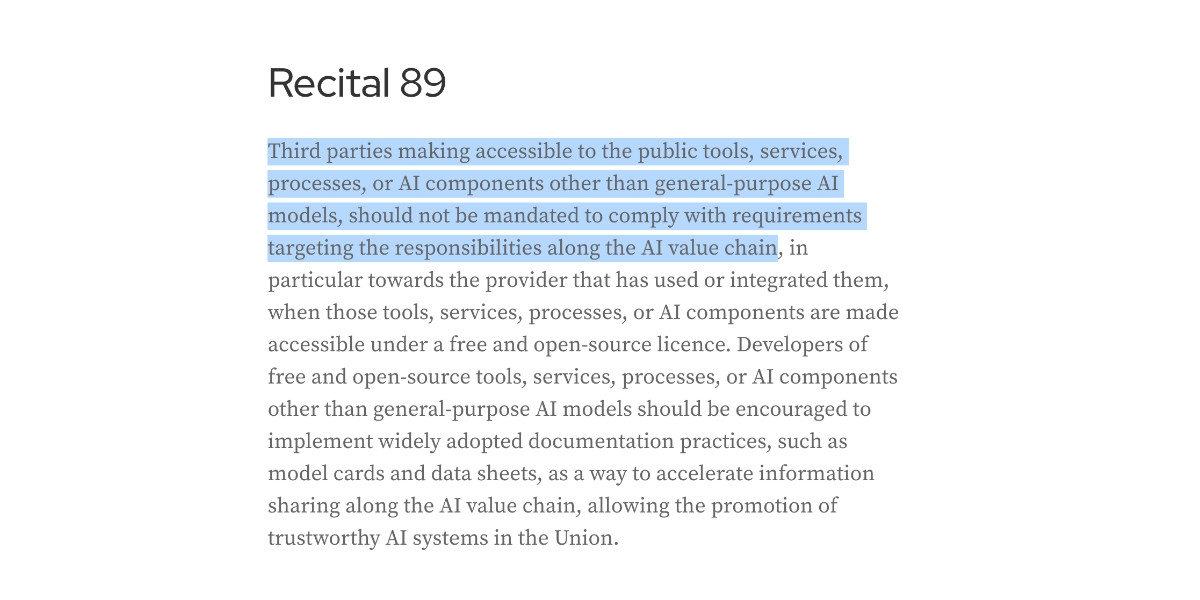
I encountered a theory a while ago that one of the reasons Meta insist on using the term “open source” for their Llama models despite the Llama license not actually conforming to the terms of the Open Source Definition is that the EU’s AI act includes special rules for open source models without requiring OSI compliance.
[... 852 words]Sunday, 20th April 2025
llm-fragments-github 0.2.
I upgraded my llm-fragments-github plugin to add a new fragment type called issue. It lets you pull the entire content of a GitHub issue thread into your prompt as a concatenated Markdown file.
(If you haven't seen fragments before I introduced them in Long context support in LLM 0.24 using fragments and template plugins.)
I used it just now to have Gemini 2.5 Pro provide feedback and attempt an implementation of a complex issue against my LLM project:
llm install llm-fragments-github
llm -f github:simonw/llm \
  -f issue:simonw/llm/938 \
  -m gemini-2.5-pro-exp-03-25 \
  --system 'muse on this issue, then propose a whole bunch of code to help implement it'
Here I'm loading the FULL content of the simonw/llm repo using that -f github:simonw/llm fragment (documented here), then loading all of the comments from issue 938 where I discuss quite a complex potential refactoring. I ask Gemini 2.5 Pro to "muse on this issue" and come up with some code.
This worked shockingly well. Here's the full response, which highlighted a few things I hadn't considered yet (such as the need to migrate old database records to the new tree hierarchy) and then spat out a whole bunch of code which looks like a solid start to the actual implementation work I need to do.
I ran this against Google's free Gemini 2.5 Preview, but if I'd used the paid model it would have cost me 202,680 input tokens, 10,460 output tokens and 1,859 thinking tokens for a total of 62.989 cents.
As a fun extra, the new issue: feature itself was written almost entirely by OpenAI o3, again using fragments. I ran this:
llm -m openai/o3 \
  -f https://raw.githubusercontent.com/simonw/llm-hacker-news/refs/heads/main/llm_hacker_news.py \
  -f https://raw.githubusercontent.com/simonw/tools/refs/heads/main/github-issue-to-markdown.html \
  -s 'Write a new fragments plugin in Python that registers issue:org/repo/123 which fetches that issue
      number from the specified github repo and uses the same markdown logic as the HTML page to turn that into a fragment'
Here I'm using the ability to pass a URL to -f and giving it the full source of my llm_hacker_news.py plugin (which shows how a fragment can load data from an API) plus the HTML source of my github-issue-to-markdown tool (which I wrote a few months ago with Claude). I effectively asked o3 to take that HTML/JavaScript tool and port it to Python to work with my fragments plugin mechanism.
o3 provided almost the exact implementation I needed, and even included support for a GITHUB_TOKEN environment variable without me thinking to ask for it. Total cost: 19.928 cents.
On a final note of curiosity I tried running this prompt against Gemma 3 27B QAT running on my Mac via MLX and llm-mlx:
llm install llm-mlx
llm mlx download-model mlx-community/gemma-3-27b-it-qat-4bit

llm -m mlx-community/gemma-3-27b-it-qat-4bit \
  -f https://raw.githubusercontent.com/simonw/llm-hacker-news/refs/heads/main/llm_hacker_news.py \
  -f https://raw.githubusercontent.com/simonw/tools/refs/heads/main/github-issue-to-markdown.html \
  -s 'Write a new fragments plugin in Python that registers issue:org/repo/123 which fetches that issue
      number from the specified github repo and uses the same markdown logic as the HTML page to turn that into a fragment'
That worked pretty well too. It turns out a 16GB local model file is powerful enough to write me an LLM plugin now!
Now that Llama has very real competition in open weight models (Gemma 3, latest Mistrals, DeepSeek, Qwen) I think their janky license is becoming much more of a liability for them. It's just limiting enough that it could be the deciding factor for using something else.
In some tasks, AI is unreliable. In others, it is superhuman. You could, of course, say the same thing about calculators, but it is also clear that AI is different. It is already demonstrating general capabilities and performing a wide range of intellectual tasks, including those that it is not specifically trained on. Does that mean that o3 and Gemini 2.5 are AGI? Given the definitional problems, I really don’t know, but I do think they can be credibly seen as a form of “Jagged AGI” - superhuman in enough areas to result in real changes to how we work and live, but also unreliable enough that human expertise is often needed to figure out where AI works and where it doesn’t.
— Ethan Mollick, On Jagged AGI


Monday, 21st April 2025
AI assisted search-based research actually works now
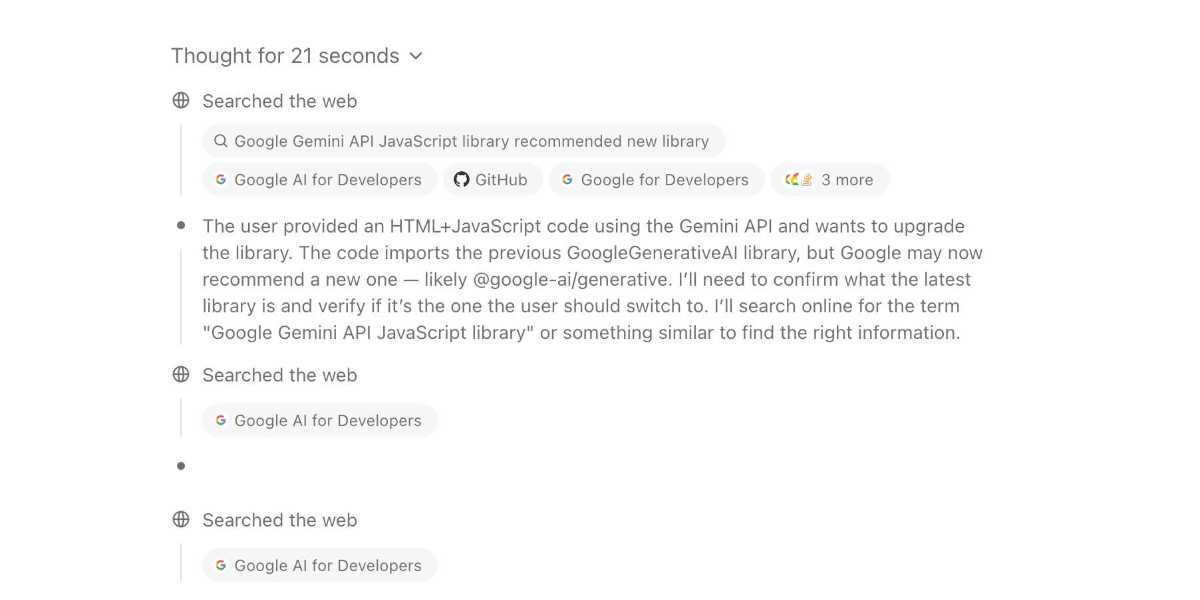
For the past two and a half years the feature I’ve most wanted from LLMs is the ability to take on search-based research tasks on my behalf. We saw the first glimpses of this back in early 2023, with Perplexity (first launched December 2022, first prompt leak in January 2023) and then the GPT-4 powered Microsoft Bing (which launched/cratered spectacularly in February 2023). Since then a whole bunch of people have taken a swing at this problem, most notably Google Gemini and ChatGPT Search.
[... 1,618 words]Decentralizing Schemes. Tim Bray discusses the challenges faced by decentralized Mastodon in that shared URLs to posts don't take into account people accessing Mastodon via their own instances, which breaks replies/likes/shares etc unless you further copy and paste URLs around yourself.
Tim proposes that the answer is URIs: a registered fedi://mastodon.cloud/@timbray/109508984818551909 scheme could allow Fediverse-aware software to step in and handle those URIs, similar to how mailto: works.
Bluesky have registered at: already, and there's also a web+ap: prefix registered with the intent of covering ActivityPub, the protocol used by Mastodon.
OpenAI o3 and o4-mini System Card. I'm surprised to see a combined System Card for o3 and o4-mini in the same document - I'd expect to see these covered separately.
The opening paragraph calls out the most interesting new ability of these models (see also my notes here). Tool usage isn't new, but using tools in the chain of thought appears to result in some very significant improvements:
The models use tools in their chains of thought to augment their capabilities; for example, cropping or transforming images, searching the web, or using Python to analyze data during their thought process.
Section 3.3 on hallucinations has been gaining a lot of attention. Emphasis mine:
We tested OpenAI o3 and o4-mini against PersonQA, an evaluation that aims to elicit hallucinations. PersonQA is a dataset of questions and publicly available facts that measures the model's accuracy on attempted answers.
We consider two metrics: accuracy (did the model answer the question correctly) and hallucination rate (checking how often the model hallucinated).
The o4-mini model underperforms o1 and o3 on our PersonQA evaluation. This is expected, as smaller models have less world knowledge and tend to hallucinate more. However, we also observed some performance differences comparing o1 and o3. Specifically, o3 tends to make more claims overall, leading to more accurate claims as well as more inaccurate/hallucinated claims. More research is needed to understand the cause of this result.
Table 4: PersonQA evaluation Metric o3 o4-mini o1 accuracy (higher is better) 0.59 0.36 0.47 hallucination rate (lower is better) 0.33 0.48 0.16
The benchmark score on OpenAI's internal PersonQA benchmark (as far as I can tell no further details of that evaluation have been shared) going from 0.16 for o1 to 0.33 for o3 is interesting, but I don't know if it it's interesting enough to produce dozens of headlines along the lines of "OpenAI's o3 and o4-mini hallucinate way higher than previous models".
The paper also talks at some length about "sandbagging". I’d previously encountered sandbagging defined as meaning “where models are more likely to endorse common misconceptions when their user appears to be less educated”. The o3/o4-mini system card uses a different definition: “the model concealing its full capabilities in order to better achieve some goal” - and links to the recent Anthropic paper Automated Researchers Can Subtly Sandbag.
As far as I can tell this definition relates to the American English use of “sandbagging” to mean “to hide the truth about oneself so as to gain an advantage over another” - as practiced by poker or pool sharks.
(Wouldn't it be nice if we could have just one piece of AI terminology that didn't attract multiple competing definitions?)
o3 and o4-mini both showed some limited capability to sandbag - to attempt to hide their true capabilities in safety testing scenarios that weren't fully described. This relates to the idea of "scheming", which I wrote about with respect to the GPT-4o model card last year.
Tuesday, 22nd April 2025
Working Through the Fear of Being Seen (via) Heartfelt piece by Ashley Willis about the challenge of overcoming self-doubt in publishing online:
Part of that is knowing who might read it. A lot of the folks who follow me are smart, opinionated, and not always generous. Some are friends. Some are people I’ve looked up to. And some are just really loud on the internet. I saw someone the other day drag a certain writing style. That kind of judgment makes me want to shrink back and say, never mind.
Try to avoid being somebody who discourages others from sharing their thoughts.
A5 (via) A5 is a new "global, equal-area, millimeter-accurate geospatial index" by Felix Palmer:
It is the pentagonal equivalent of other DGGSs, like S2 or H3, but with higher accuracy and lower distortion.
Effectively it's a way of dividing the entire world into pentagons where each one covers the same physical area (to within a 2% threshold) - like Uber's H3 but a bit weirder and more fun. An A5 reference implementation written in TypeScript is available on GitHub.
This interactive demo helps show how it works:

Why pentagons? Here's what the A5 docs say:
A5 is unique in that it uses a pentagonal tiling of a dodecahedron. [...] The benefit of choosing a dodecahedron is that it is the platonic solid with the lowest vertex curvature, and by this measure it is the most spherical of all the platonic solids. This is key for minimizing cell distortion as the process of projecting a platonic solid onto a sphere involves warping the cell geometry to force the vertex curvature to approach zero. Thus, the lower the original vertex curvature, the less distortion will be introduced by the projection.
I had to look up platonic solids on Wikipedia. There are only five: Tetrahedron, Cube, Octahedron, Dodecahedron and Icosahedron and they can be made using squares, triangles or (in the case of the Dodecahedron) pentagons, making the pentagon the most circle-like option.
Abusing DuckDB-WASM by making SQL draw 3D graphics (Sort Of) (via) Brilliant hack by Patrick Trainer who got an ASCII-art Doom clone running in the browser using convoluted SQL queries running against the WebAssembly build of DuckDB. Here’s the live demo, and the code on GitHub.
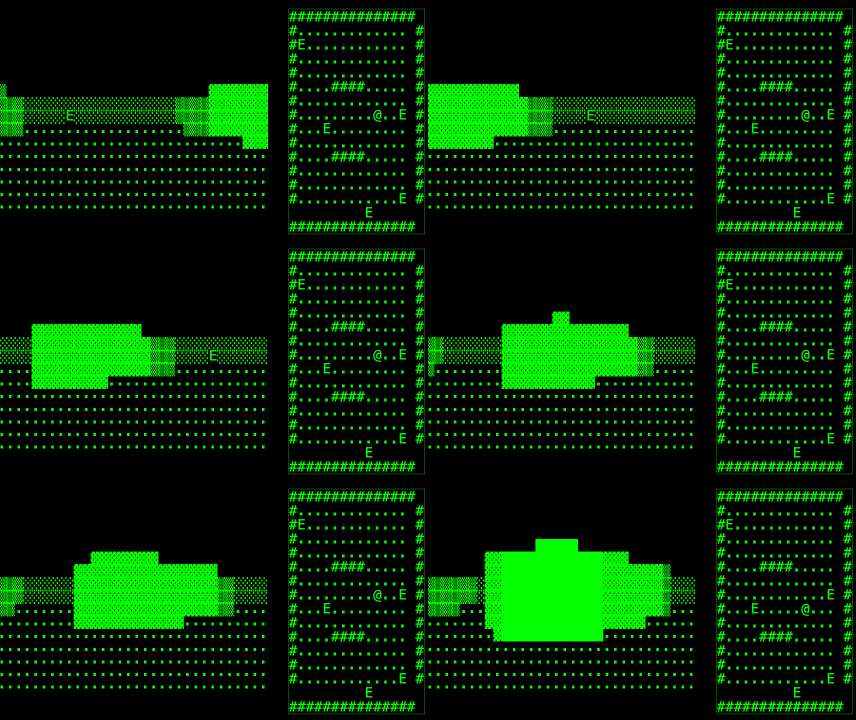
The SQL is so much fun. Here’s a snippet that implements ray tracing as part of a SQL view:
CREATE OR REPLACE VIEW render_3d_frame AS
WITH RECURSIVE
    -- ...
    rays AS (
        SELECT
            c.col,
            (p.dir - s.fov/2.0 + s.fov * (c.col*1.0 / (s.view_w - 1))) AS angle
        FROM cols c, s, p
    ),
    raytrace(col, step_count, fx, fy, angle) AS (
        SELECT
            r.col,
            1,
            p.x + COS(r.angle)*s.step,
            p.y + SIN(r.angle)*s.step,
            r.angle
        FROM rays r, p, s
        UNION ALL
        SELECT
            rt.col,
            rt.step_count + 1,
            rt.fx + COS(rt.angle)*s.step,
            rt.fy + SIN(rt.angle)*s.step,
            rt.angle
        FROM raytrace rt, s
        WHERE rt.step_count < s.max_steps
          AND NOT EXISTS (
              SELECT 1
              FROM map m
              WHERE m.x = CAST(rt.fx AS INT)
                AND m.y = CAST(rt.fy AS INT)
                AND m.tile = '#'
          )
    ),
    -- ...
ClickHouse gets lazier (and faster): Introducing lazy materialization (via) Tom Schreiber describe's the latest optimization in ClickHouse, and in the process explores a whole bunch of interesting characteristics of columnar datastores generally.
As I understand it, the new "lazy materialization" feature means that if you run a query like this:
select id, big_col1, big_col2
from big_table order by rand() limit 5
Those big_col1 and big_col2 columns won't be read from disk for every record, just for the five that are returned. This can dramatically improve the performance of queries against huge tables - for one example query ClickHouse report a drop from "219 seconds to just 139 milliseconds—with 40× less data read and 300× lower memory usage."
I'm linking to this mainly because the article itself is such a detailed discussion of columnar data patterns in general. It caused me to update my intuition for how queries against large tables can work on modern hardware. This query for example:
SELECT helpful_votes
FROM amazon.amazon_reviews
ORDER BY helpful_votes DESC
LIMIT 3;
Can run in 70ms against a 150 million row, 70GB table - because in a columnar database you only need to read that helpful_votes integer column which adds up to just 600MB of data, and sorting 150 million integers on a decent machine takes no time at all.
I was against using AI for programming for a LONG time. It never felt effective.
But with the latest models + tools, it finally feels like a real performance boost
If you’re still holding out, do yourself a favor: spend a few focused hours actually using it
Wednesday, 23rd April 2025
An underestimated challenge in making productive use of LLMs is that it can feel like cheating.
One trick I've found that helps is to make sure that I am putting in way more text than the LLM is spitting out .
This goes for code: I'll pipe in a previous project for it to modify, or ask it to combine two, or paste in my research notes.
It also goes for writing. I hardly ever publish material that was written by an LLM, but I feel least icky about content where I had an extensive voice conversation with the model and then asked it to turn that into notes.
I have a hunch that overcoming the feeling of guilt associated with using LLMs is one of the most important skills required to make effective use of them!
My gold standard for LLM usage remains this: would I be proud to stake my own credibility on the quality of the end result?
Related, this excellent advice from Laurie Voss:
Is what you're doing taking a large amount of text and asking the LLM to convert it into a smaller amount of text? Then it's probably going to be great at it. If you're asking it to convert into a roughly equal amount of text it will be so-so. If you're asking it to create more text than you gave it, forget about it.
Despite being rusty with coding (I don't code every day these days): since starting to use Windsurf / Cursor with the recent increasingly capable models: I am SO back to being as fast in coding as when I was coding every day "in the zone" [...]
When you are driving with a firm grip on the steering wheel - because you know exactly where you are going, and when to steer hard or gently - it is just SUCH a big boost.
I have a bunch of side projects and APIs that I operate - but usually don't like to touch it because it's (my) legacy code.
Not any more.
I'm making large changes, quickly. These tools really feel like a massive multiplier for experienced devs - those of us who have it in our head exactly what we want to do and now the LLM tooling can move nearly as fast as my thoughts!