Posts in 2021
Filters: Year: 2021 × Sorted by date


Many of you here today are toolbuilders who help people work with data. Rather than presuming that those using your tools are clear-eyed about their data, how can you build features and methods that ensure people know the limits of their data and work with them responsibly? Your tools are not neutral. Neither is the data that your tools help analyze. How can you build tools that invite responsible data use and make visible when data is being manipulated? How can you help build tools for responsible governance?
The Asymmetry of Open Source (via) Caddy creator Matt Holt provides “a comprehensive guide to funding open source software projects”. This is really useful—it describes a whole range of funding models that have been demonstrated to work, including sponsorship, consulting, private support channels and more.
Weeknotes: datasette-tiddlywiki, filters_from_request
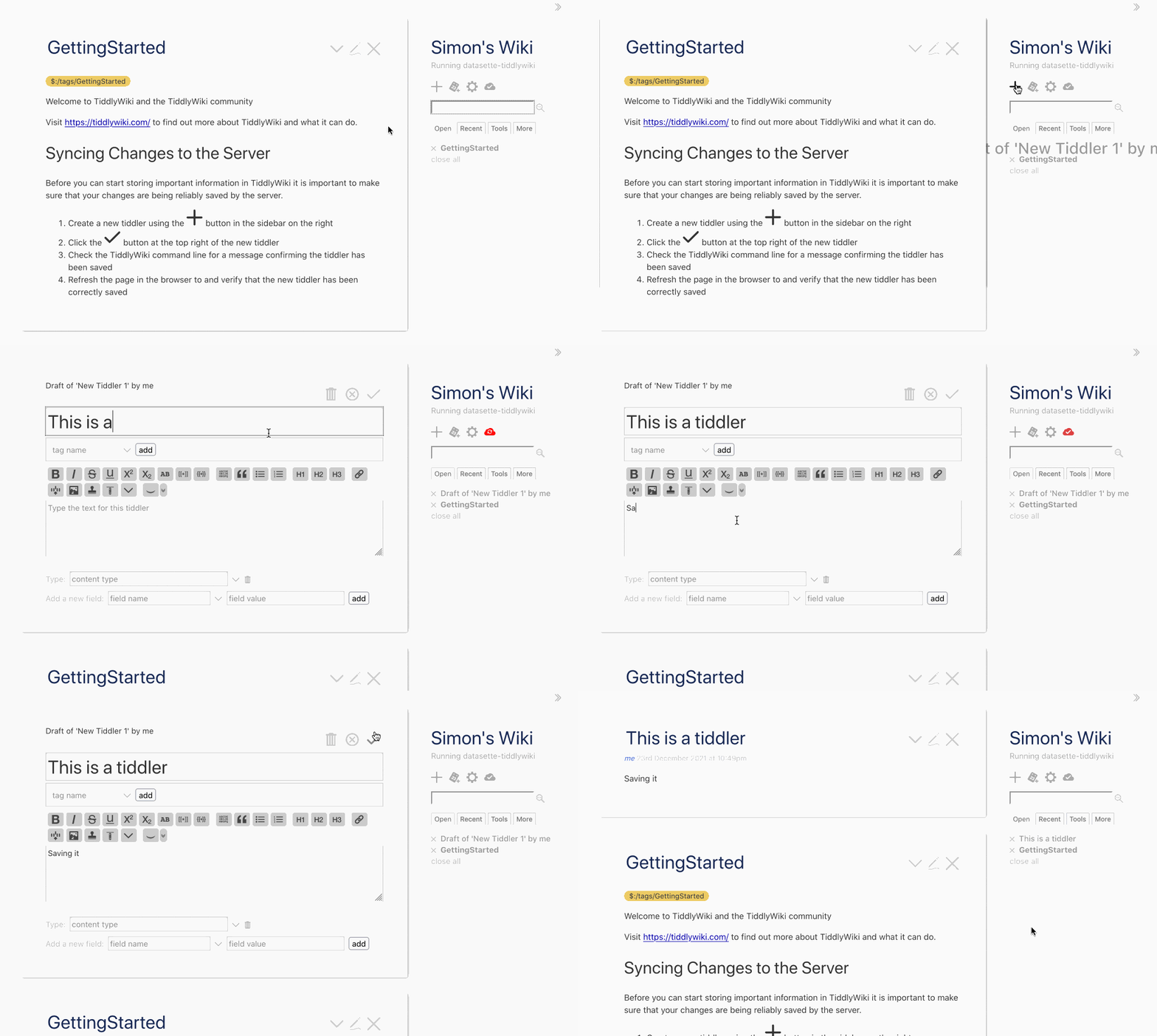
I made some good progress on the big refactor this week, including extracting some core logic out into a new Datasette plugin hook. I also got distracted by TiddlyWiki and released a new Datasette plugin that lets you run TiddlyWiki inside Datasette.
[... 1,197 words]

Annotated explanation of David Beazley’s dataklasses (via) David Beazley released a self-described “deliciously evil spin on dataclasses” that uses some deep Python trickery to implement a dataclass style decorator which creates classes that import 15-20 times faster than the original. I put together a heavily annotated version of his code while trying to figure out how all of the different Python tricks in it work.

Transactionally Staged Job Drains in Postgres. Any time I see people argue that relational databases shouldn’t be used to implement job queues I think of this post by Brandur from 2017. If you write to a queue before committing a transaction you run the risk of a queue consumer trying to read from the database before the new row becomes visible. If you write to the queue after the transaction there’s a risk an error might result in your message never being written. So: write to a relational staging table as part of the transaction, then have a separate process read from that table and write to the queue.


TypeScript for Pythonistas (via) Really useful explanation of how TypeScript differs from Python with mypy. I hadn’t realized TypeScript leans so far into structural typing, to the point that two types with different names but the same “shape” are identified as being the same type as each other.

Weeknotes: Trapped in an eternal refactor
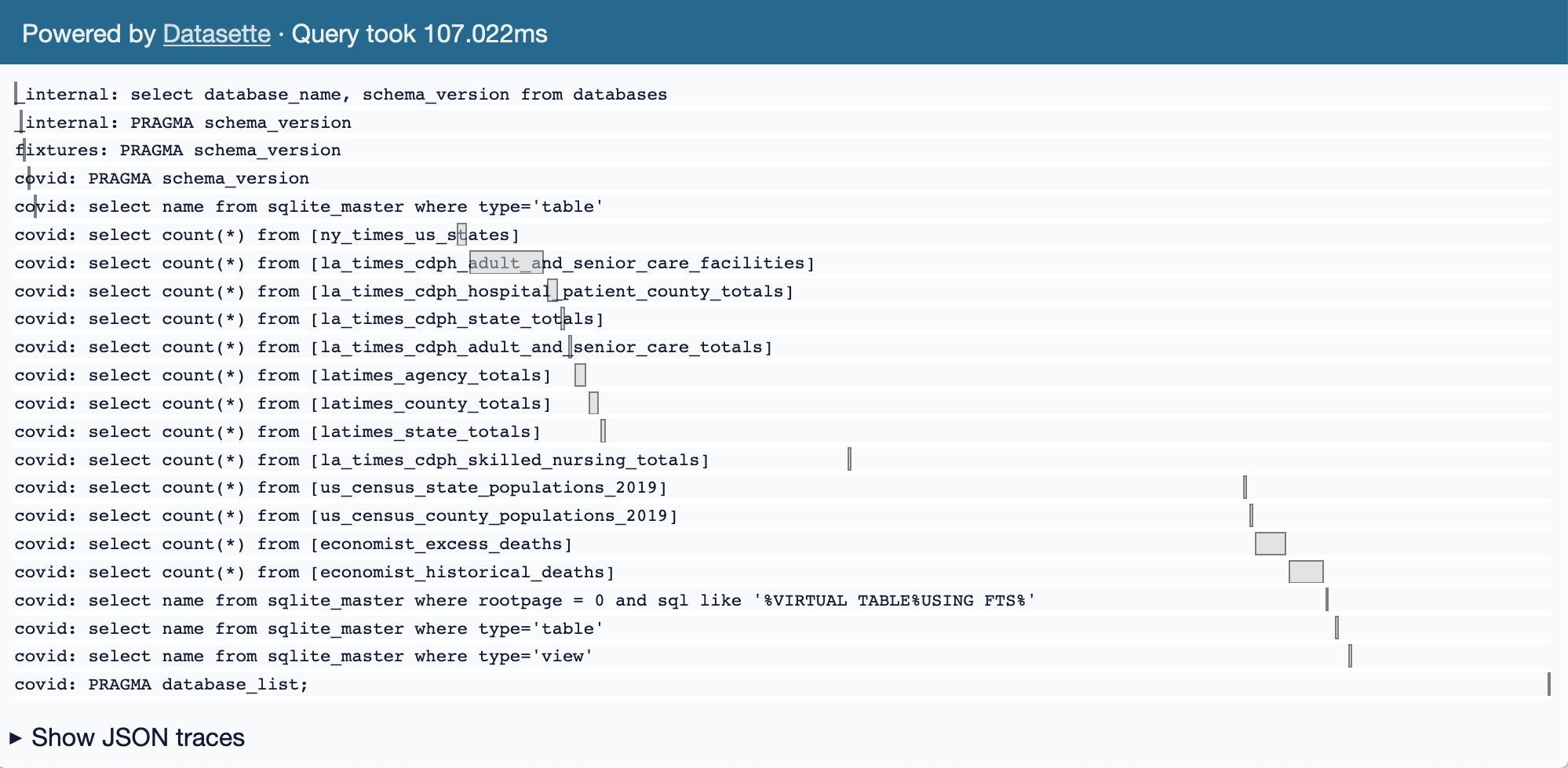
I’m still working on refactoring Datasette’s table view. In doing so I spun out a new plugin, datasette-pretty-traces, which improves Datasette’s tooling for seeing the SQL that was executed to build a specific page.
[... 544 words]A deep dive into an NSO zero-click iMessage exploit: Remote Code Execution (via) Fascinating and terrifying description of an extremely sophisticated attack against iMessage. iMessage was passing incoming image bytes through to a bunch of different libraries to figure out which image format should be decoded, including a PDF renderer that supported the old JBIG2 compression format. JBIG2 includes a mechanism for programatically swapping the values of individual black and white pixels... which turns out to be Turing complete, and means that a sufficiently cunning “image” can include a full computer architecture defined in terms of logical bit operations. Combine this with an integer overflow and you can perform arbitrary memory operations that break out of the iOS sandbox.
servefolder.dev (via) Absurdly clever application of service workers and the file system API: you can select a folder from your computer and the contents of that folder will be served (just to you) from a path on this website—all without uploading any content. The code is on GitHub and offers a useful, succinct introduction to how to use those APIs.

wheel.yml for Pyjion using cibuildwheel (via) cibuildwheel, maintained by the Python Packaging Authority, builds and tests Python wheels across multiple platforms. I hadn’t realized quite how minimal a configuration using their GitHub Actions action was until I looked at how Pyjion was using it.
Introducing stack graphs (via) GitHub launched “precise code navigation” for Python today—the first language to get support for this feature. Click on any Python symbol in GitHub’s code browsing views and a box will show you exactly where that symbol was defined—all based on static analysis by a custom parser written in Rust as opposed to executing any Python code directly. The underlying computer science uses a technique called stack graphs, based on scope graphs research from Eelco Visser’s research group at TU Delft.
Notes on Notes.app.
Apple's Notes app keeps its data in a SQLite database at ~/Library/Group\ Containers/group.com.apple.notes/NoteStore.sqlite - but it's pretty difficult to extract data from. It turns out the note text is stored as a gzipped protocol buffers object in the ZICNOTEDATA.ZDATA column. Steve Dunham did the hard work of figuring out how it all works - the complexity stems from Apple's use of CRDT's to support seamless multiple edits from different devices.