Posts in 2020
Filters: Year: 2020 × Sorted by date


You know Google Maps? What I do is, like, build little pieces of Google Maps over and over for people who need them but can’t just use Google Maps because they’re not allowed to for some reason, or another.

Replicating SQLite with rqlite (via) I’ve been trying out rqlite, a “lightweight, distributed relational database, which uses SQLite as its storage engine”. It’s written in Go and uses the Raft consensus algorithm to allow a cluster of nodes to elect a leader and replicate SQLite statements between them. By default it uses in-memory SQLite databases with an on-disk Raft replication log—here are my notes on running it in “on disk” mode as a way to run multiple Datasette processes against replicated SQLite database files.

While copywriting is used to persuade a user to take a certain action, technical writing exists to support the user and remove barriers to getting something done. Good technical writing is hard because writers must get straight to the point without losing or confusing readers.
Weeknotes: Datasette internals
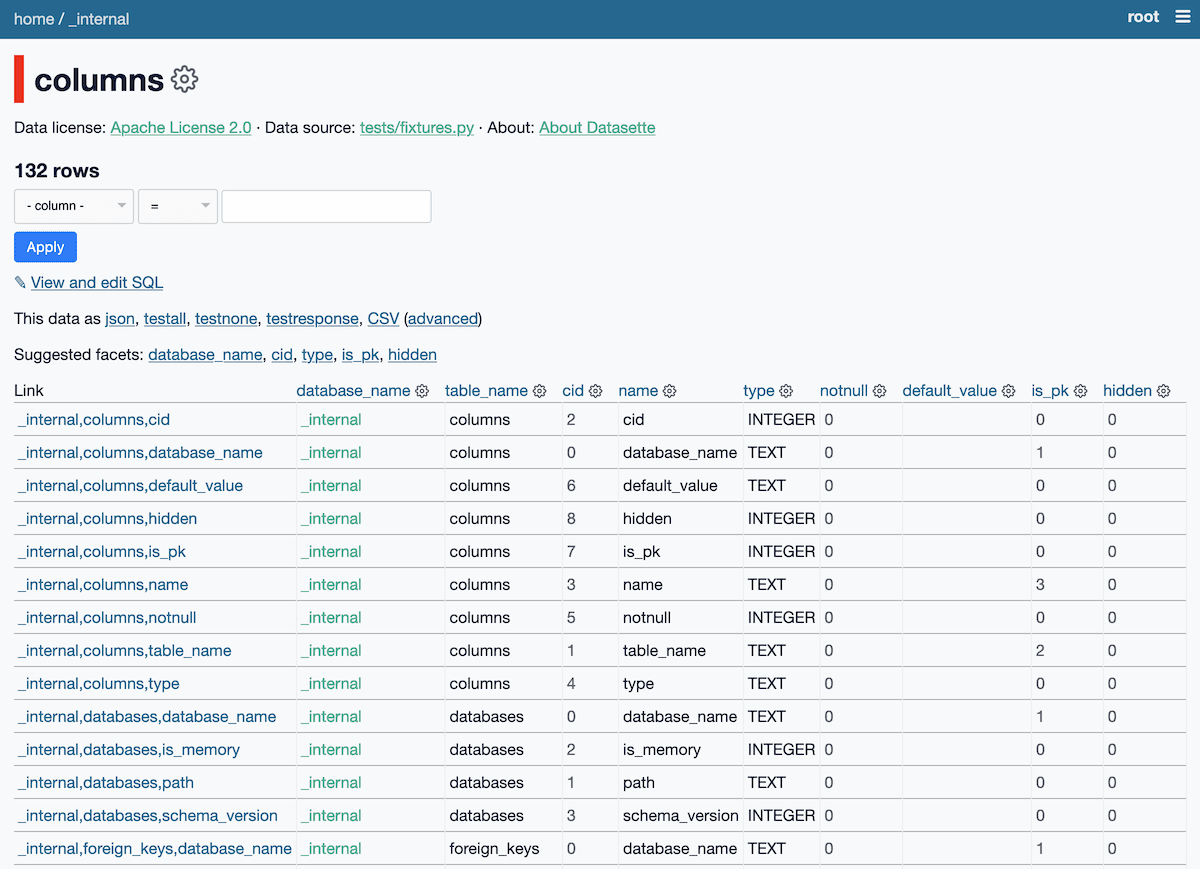
I’ve been working on some fundamental changes to Datasette’s internal workings—they’re not quite ready for a release yet, but they’re shaping up in an interesting direction.
[... 760 words]Datasette Weekly: Official project website for Datasette, building a search engine with Dogsheep Beta, sqlite-utils analyze-tables (via) Volume 5 of the Datasette Weekly-ish newsletter.
Building a search engine for datasette.io
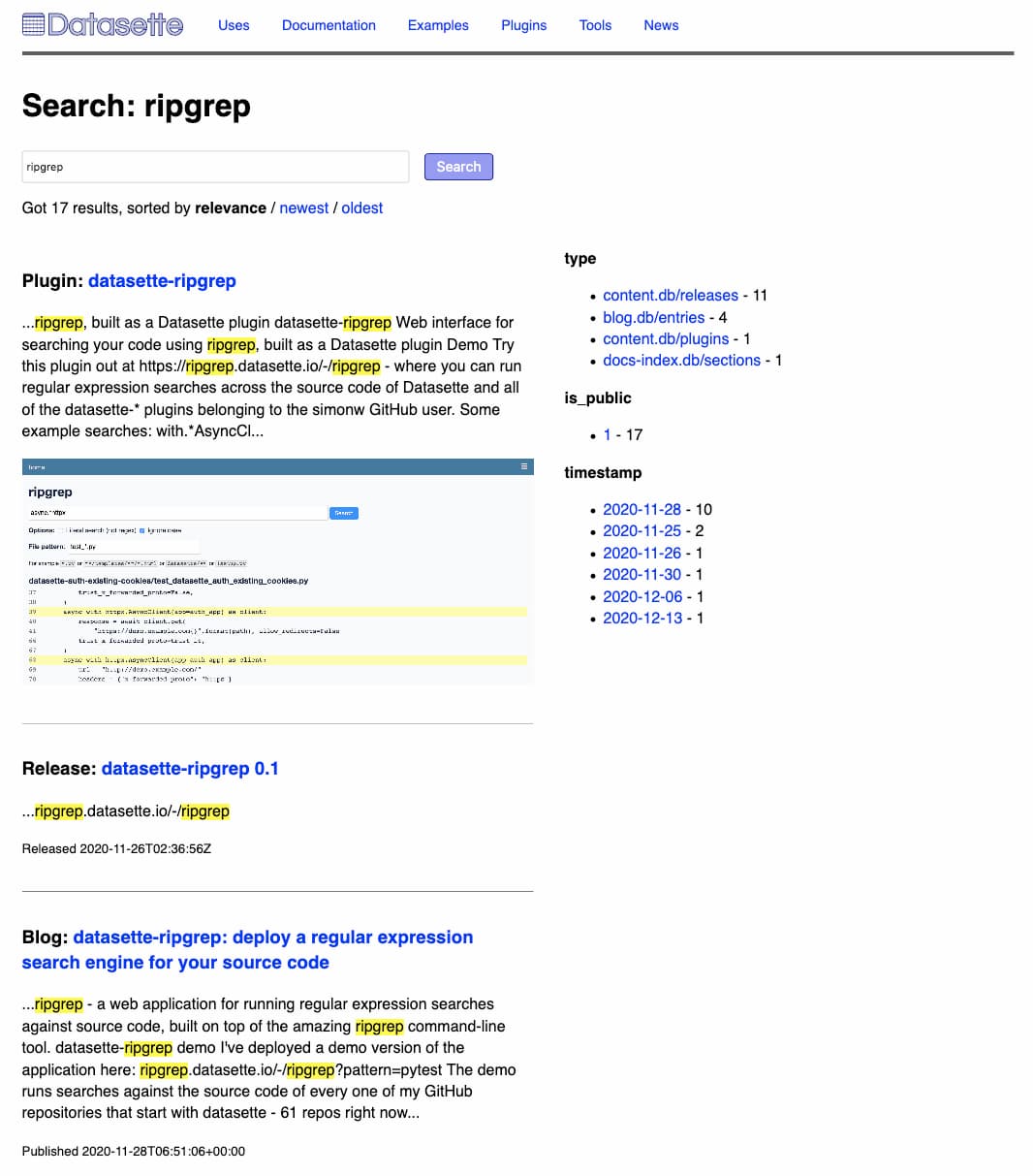
This week I added a search engine to datasette.io, using the search indexing tool I’ve been building for Dogsheep.
[... 1,391 words]How Shopify Uses WebAssembly Outside of the Browser (via) I’m fascinated by applications of WebAssembly outside the browser. As a Python programmer I’m excited to see native code libraries getting compiled to WASM in a way that lets me call them from Python code via a bridge, but the other interesting application is executing untrusted code in a sandbox.
Shopify are doing exactly that—they are building a kind-of plugin mechanism where partner code compiled to WASM runs inside their architecture using Fastly’s Lucet. The performance numbers are in the same ballpark as native code.
Also interesting: they’re recommending AssemblyScript, a TypeScript-style language designed to compile directly to WASM without needing any additional interpreter support, as required by dynamic languages such as JavaScript, Python or Ruby.
Commits are snapshots, not diffs (via) Useful, clearly explained revision of some Git fundamentals.
At GitHub, we want to protect developer privacy, and we find cookie banners quite irritating, so we decided to look for a solution. After a brief search, we found one: just don’t use any non-essential cookies. Pretty simple, really. 🤔
So, we have removed all non-essential cookies from GitHub, and visiting our website does not send any information to third-party analytics services.
I get asked a lot about learning to code. Sure, if you can. It's fun. But the real action, the crux of things, is there in the database. Grab a tiny, free database like SQLite. Import a few million rows of data. Make them searchable. It's one of the most soothing activities known to humankind, taking big piles of messy data and massaging them into the rigid structure required of a relational database. It's true power.





Build v.s. buy: how billing models affect your internal culture
Something to pay attention to when making a build v.s. buy decision is the impact that billing models will have on your usage of a tool.
[... 410 words]datasette.io, an official project website for Datasette
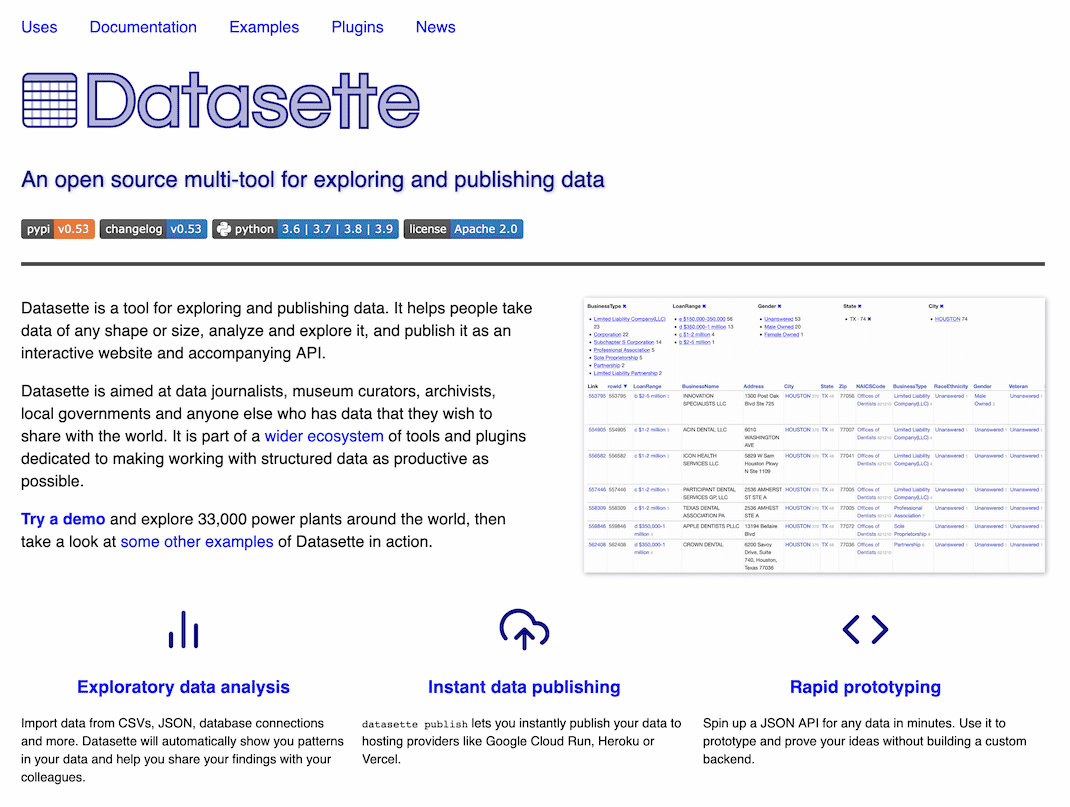
This week I launched datasette.io—the new official project website for Datasette.
[... 1,971 words]

If you are pre-product market fit it's probably too early to think about event based analytics. If you have a small number of users and are able to talk with all of them, you will get much more meaningful data getting to know them than if you were to set up product analytics. You probably don't have enough users to get meaningful data from product analytics anyways.
datasette.io (via) Datasette finally has an official project website, three years after the first release of the software. I built it using Datasette, with custom templates to define the various pages. The site includes news, latest releases, example sites and a new searchable plugin directory.