8 posts tagged “404-media”
2026
We Tracked a Shipment of Rare Books. It Ended at an Amazon AI Training Facility. Excellent piece of reporting from 404 Media. For a while now there have been stories of book dealers receiving orders for large volumes of books from apparently price-insensitive anonymous customers, widely suspected to be companies looking to scan them for AI training (see my previous coverage of Anthropic's book scanning from June 2025.)
404 Media investigated with an AirTag!
In July, one bookseller told me they received a very large order of around 1,000 books on Biblio, one of these marketplaces. The seller agreed to put an Apple AirTag provided by 404 Media in one of the books included in this order so we could see where the book was going. And by extension, which company, AI or otherwise, was behind this massive order.
The book ended up delivered to the VGT3 corner of the LAS8 Amazon facility in the north east of Las Vegas, where the entrance carried this on-the-nose logo of a dinosaur with a book!

Photo credit: 404 Media
Online forum discussions between Amazon workers confirmed that VGT3 destructively scans large volumes of books.
The Tokenpocalypse Is Here: Companies Are Scrambling To Stop Spending So Much on AI (via) There's a fun anecdote from Accenture (apparently via leaked meeting audio recordings) in this 404 Media piece from June 24th:
“We’re seeing from some of the data internally at least that it’s actually not our engineers that are driving the token consumption. It’s a lot of the non-engineers that are doing some of those behaviors [...] you were talking about,” Justice Kwak, Accenture’s agentic AI strategy lead, said [...]
Stuart Henderson, Accenture’s client group lead, interrupts. He jokes he hopes Kwak didn’t just convert a PDF into images and then into markdown files. “I’m learning that’s one of the big token chewers,” Henderson says. “Turning PDFs into markdown: is that right?”
That’s when Kwak says that’s what Accenture’s own data shows.
Maybe if Accenture figure out that PDFs are a terrible medium for communicating information they'll be able to push that message out to the rest of the business world too!
After this story was published Google's spokesperson reached out and asked us to publish a slightly different version of that statement. The new statement no longer stated that "it's critical that we maintain humans in the loop."
— Emanuel Maiberg, 404 Media, Google Employees Internally Share Memes About How Its AI Sucks
2025
Official statement from Tea on their data leak. Tea is a dating safety app for women that lets them share notes about potential dates. The other day it was subject to a truly egregious data leak caused by a legacy unprotected Firebase cloud storage bucket:
A legacy data storage system was compromised, resulting in unauthorized access to a dataset from prior to February 2024. This dataset includes approximately 72,000 images, including approximately 13,000 selfies and photo identification submitted by users during account verification and approximately 59,000 images publicly viewable in the app from posts, comments and direct messages.
Storing and then failing to secure photos of driving licenses is an incredible breach of trust. Many of those photos included EXIF location information too, so there are maps of Tea users floating around the darker corners of the web now.
I've seen a bunch of commentary using this incident as an example of the dangers of vibe coding. I'm confident vibe coding was not to blame in this particular case, even while I share the larger concern of irresponsible vibe coding leading to more incidents of this nature.
The announcement from Tea makes it clear that the underlying issue relates to code written prior to February 2024, long before vibe coding was close to viable for building systems of this nature:
During our early stages of development some legacy content was not migrated into our new fortified system. Hackers broke into our identifier link where data was stored before February 24, 2024. As we grew our community, we migrated to a more robust and secure solution which has rendered that any new users from February 2024 until now were not part of the cybersecurity incident.
Also worth noting is that they stopped requesting photos of ID back in 2023:
During our early stages of development, we required selfies and IDs as an added layer of safety to ensure that only women were signing up for the app. In 2023, we removed the ID requirement.
Update 28th July: A second breach has been confirmed by 404 Media, this time exposing more than one million direct messages dated up to this week.
Chicago Sun-Times Prints AI-Generated Summer Reading List With Books That Don’t Exist. Classic slop: it listed real authors with entirely fake books.
There's an important follow-up from 404 Media in their subsequent story:
Victor Lim, the vice president of marketing and communications at Chicago Public Media, which owns the Chicago Sun-Times, told 404 Media in a phone call that the Heat Index section was licensed from a company called King Features, which is owned by the magazine giant Hearst. He said that no one at Chicago Public Media reviewed the section and that historically it has not reviewed newspaper inserts that it has bought from King Features.
“Historically, we don’t have editorial review from those mainly because it’s coming from a newspaper publisher, so we falsely made the assumption there would be an editorial process for this,” Lim said. “We are updating our policy to require internal editorial oversight over content like this.”
2024
Where Facebook’s AI Slop Comes From. Jason Koebler continues to provide the most insightful coverage of Facebook's weird ongoing problem with AI slop (previously).
Who's creating this stuff? It looks to primarily come from individuals in countries like India and the Philippines, inspired by get-rich-quick YouTube influencers, who are gaming Facebook's Creator Bonus Program and flooding the platform with AI-generated images.
Jason highlights this YouTube video by YT Gyan Abhishek (136,000 subscribers) and describes it like this:
He pauses on another image of a man being eaten by bugs. “They are getting so many likes,” he says. “They got 700 likes within 2-4 hours. They must have earned $100 from just this one photo. Facebook now pays you $100 for 1,000 likes … you must be wondering where you can get these images from. Don’t worry. I’ll show you how to create images with the help of AI.”
That video is in Hindi but you can request auto-translated English subtitles in the YouTube video settings. The image generator demonstrated in the video is Ideogram, which offers a free plan. (Here's pelicans having a tea party on a yacht.)
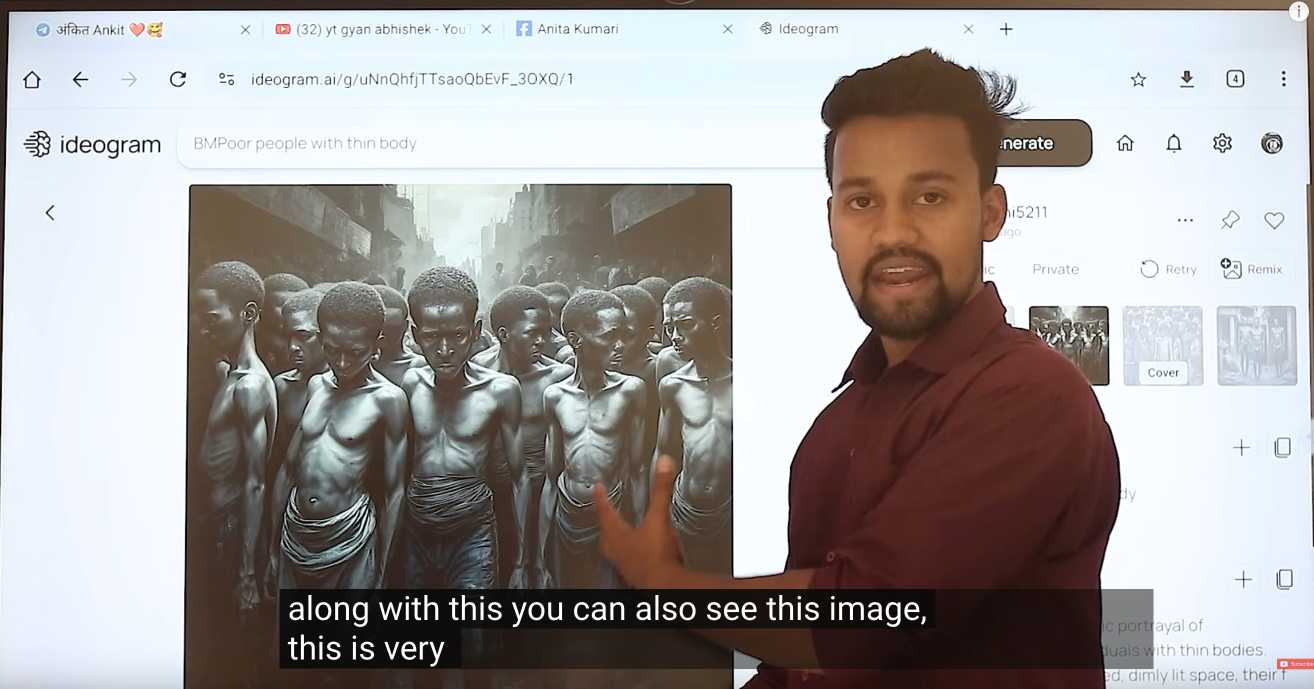
Jason's reporting here runs deep - he goes as far as buying FewFeed, dedicated software for scraping and automating Facebook, and running his own (unsuccessful) page using prompts from YouTube tutorials like:
an elderly woman celebrating her 104th birthday with birthday cake realistic family realistic jesus celebrating with her
I signed up for a $10/month 404 Media subscription to read this and it was absolutely worth the money.
Leaked Documents Show Nvidia Scraping ‘A Human Lifetime’ of Videos Per Day to Train AI.
Samantha Cole at 404 Media reports on a huge leak of internal NVIDIA communications - mainly from a Slack channel - revealing details of how they have been collecting video training data for a new video foundation model called Cosmos. The data is mostly from YouTube, downloaded via yt-dlp using a rotating set of AWS IP addresses and consisting of millions (maybe even hundreds of millions) of videos.
The fact that companies scrape unlicensed data to train models isn't at all surprising. This article still provides a fascinating insight into what model training teams care about, with details like this from a project update via email:
As we measure against our desired distribution focus for the next week remains on cinematic, drone footage, egocentric, some travel and nature.
Or this from Slack:
Movies are actually a good source of data to get gaming-like 3D consistency and fictional content but much higher quality.
My intuition here is that the backlash against scraped video data will be even more intense than for static images used to train generative image models. Video is generally more expensive to create, and video creators (such as Marques Brownlee / MKBHD, who is mentioned in a Slack message here as a potential source of "tech product neviews - super high quality") have a lot of influence.
There was considerable uproar a few weeks ago over this story about training against just captions scraped from YouTube, and now we have a much bigger story involving the actual video content itself.
Bullying in Open Source Software Is a Massive Security Vulnerability. The Xz story from last month, where a malicious contributor almost managed to ship a backdoor to a number of major Linux distributions, included a nasty detail where presumed collaborators with the attacker bullied the maintainer to make them more susceptible to accepting help.
Hans-Christoph Steiner from F-Droid reported a similar attempt from a few years ago:
A new contributor submitted a merge request to improve the search, which was oft requested but the maintainers hadn't found time to work on. There was also pressure from other random accounts to merge it. In the end, it became clear that it added a SQL injection vulnerability.
404 Media's Jason Koebler ties the two together here and makes the case for bullying as a genuine form of security exploit in the open source ecosystem.