25 posts tagged “game-design”
2026
Another game experiment - I wanted to see if it was feasible to have a two player game on two separate phones running in static HTML where the networking code uses chirps sent via the microphone. It seems to work!
Build a two player competitive pong like game where two players use their phones close to each other and the game state is sent via audio noises which the web microphone API can interpret - but add graphical and gameplay twists to make it a lot more fun and intertwine than pong
Claude Opus 5.5 Extra in Claude Code.
Another game experiment with Claude. This one used the default Claude iPhone app (chat mode, not Claude Code mode), where I prompted Claude Opus 5.5 Max with:
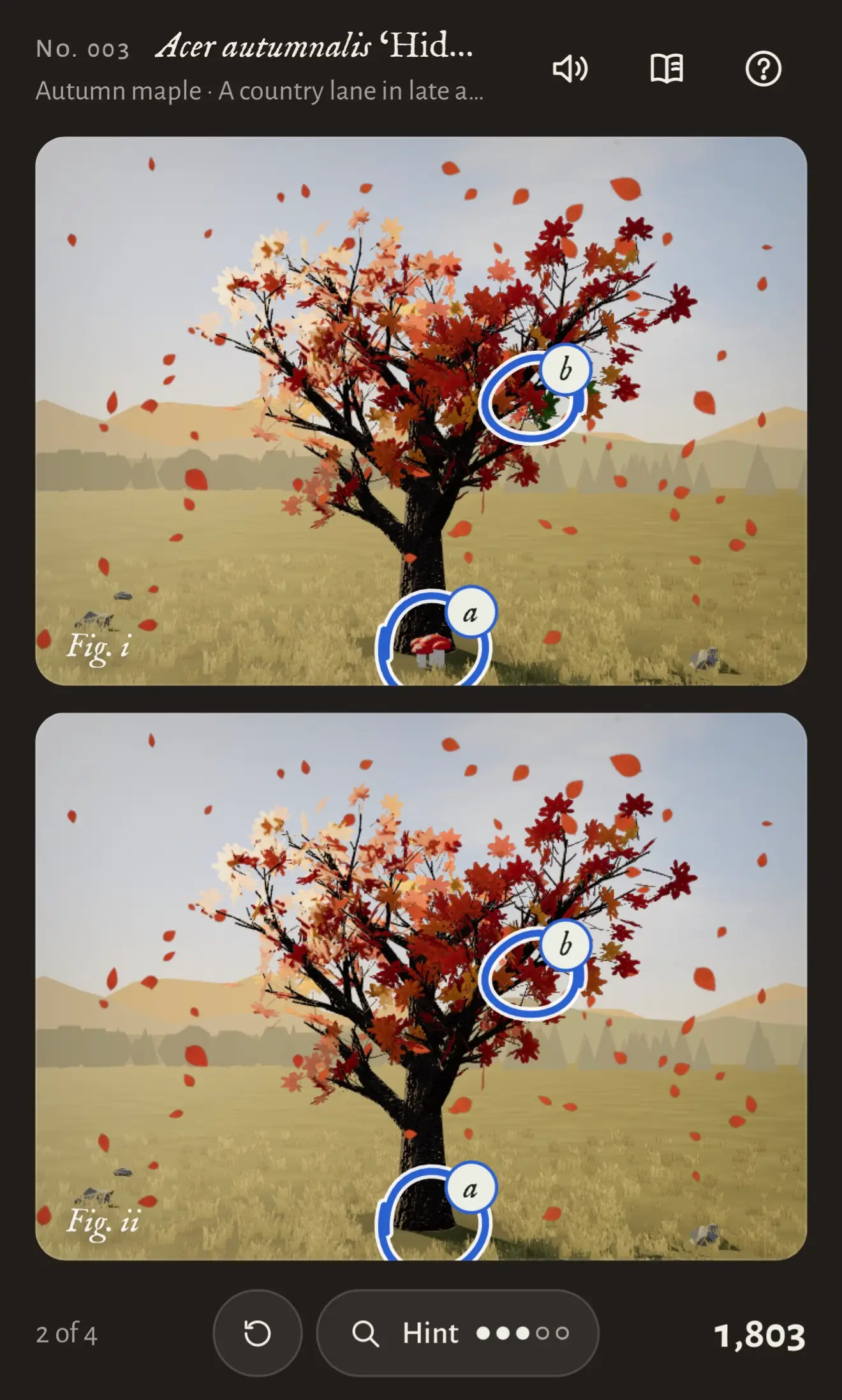
Build a three js game called "Tree appreciator" - it shows you two algorithmically generated trees and the game mechanics is about appreciating the differences between them. Think hard about how to make sure it is both fun and beautiful.
Somewhat embarrassingly given my recent talk, I've found that telling Opus 5.5 "make sure it is fun" works uncomfortably well. In this case Claude crunched for 3 hours and 7 minutes before retuning a cosy little spot-the-difference game with music and animation and achievements that's quite compelling to play.

AI is mass decompiling games. That’s both awesome and scary. (via) Indie game developer Popcar talks about the recent wave of AI-powered decompilation of existing games, enabling weird mashups between existing games, and producing a boom in game preservation projects to get old games working on new hardware (often in a browser using WebAssembly).
I like how this piece captures both the positives and the negatives of this new development:
Most people already realized the scary part by now. If AI can decompile games and software, then the entire tech industry is about to explode. Anybody can decompile other software and use it any way they'd like, and nobody can stop them. Companies can steal from competitors. Your paid game or app can be open-sourced against your will. This isn't exclusive to old video games, we can apply this to any software. [...]
This is also a big win for preservation. Old games can be ported, modified, enhanced, and made much more easily accessible than before. [...[
With console makers going all in on digital and games becoming entirely unplayable due to servers shutting down, this is fantastic news. We could own software we bought regardless of what the company thinks.
They took the letters from me! I have to talk about dwarf behavior now. I can't even talk about dwarf AI. It doesn't exist. It's dwarf behavior, and they misbehave sometimes
— Tarn Adams, co-creator of Dwarf Fortress
Moonlight & Mayhem (Raccoon Heist by Codex + GPT-5.6 Sol Ultra). On Wednesday I wrote about One-shotting a Raccoon Heist game using Claude Fable 5, where I had Claude Fable 5 build a full working game from a premise I generated with GPT-3 and DALL-E four years ago.
I decided to pose the exact same prompt to Codex Desktop running GPT-5.6 Sol Ultra - the mode where Sol makes aggressive use of sub-agents - to see how it would do.
It produced a much better game! Here's Moonlight & Mayhem - GitHub repository here, including the textures and prompts it generated using gpt-image-2.
The original GPT-3 generated game description included:
In “Raccoon Heist”, you and your team of thieving raccoons are tasked with pulling off a series of daring heists. From robbing banks to stealing priceless art, no job is too big or too small for your furry crew.
Fable's version had you as a single raccoon running around a back yard collecting coins and fish. GPT-5.6 Sol has you in a museum, rescuing your two other raccoon crewmates in order to stack on top of each other and bust the golden sardine out of its case.
Much more heisty!
There was one catch though: the version produced from the one-shot prompt had a bug where each raccoon had an eyeball that was enlarged to the size of a giant sphere floating over their head!
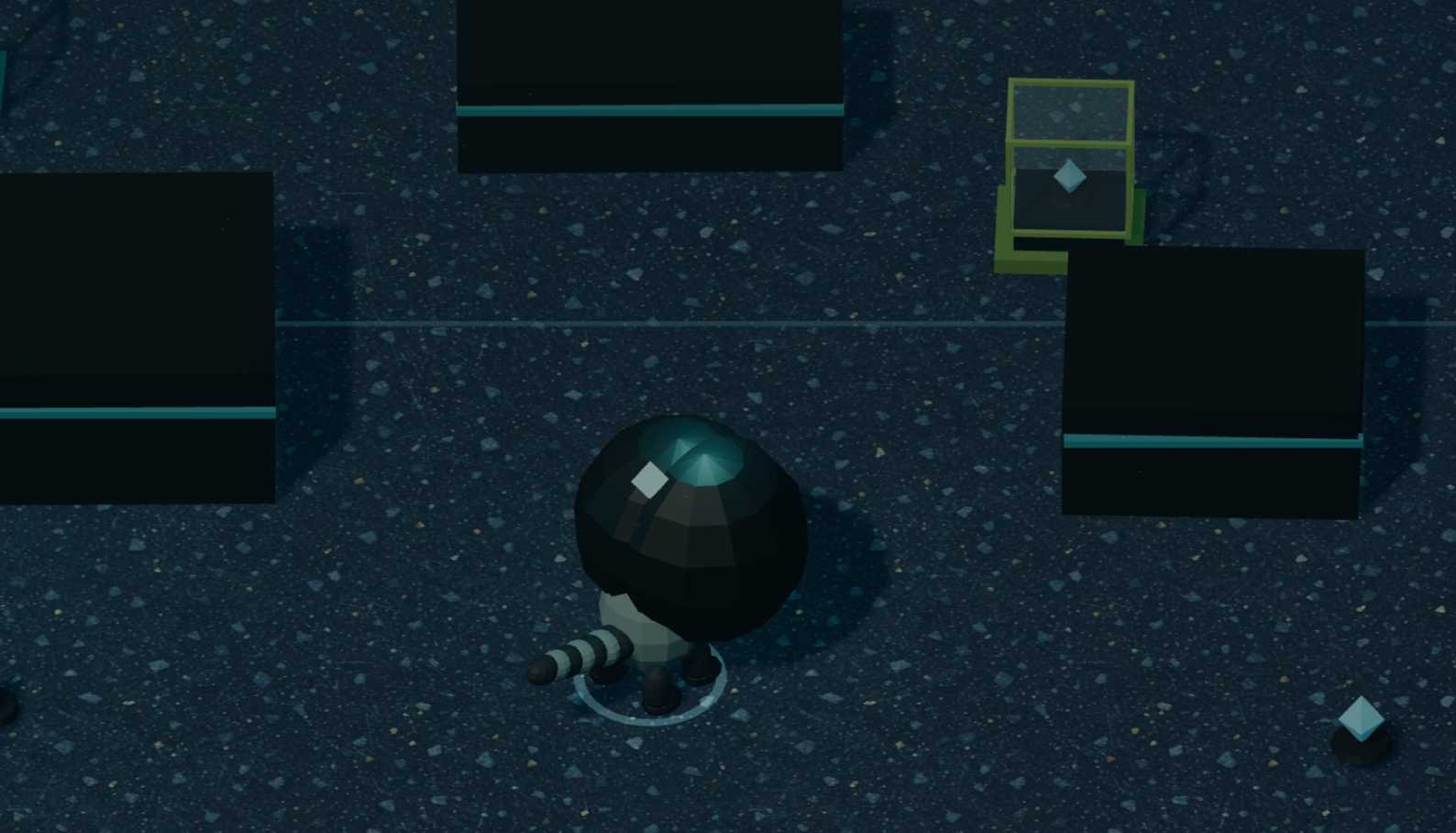
You can play that version here.
Despite reviewing screenshots during development Codex failed to spot and correct this bug.
I fixed it by prompting:
Why do the raccoons have huge black spheres on them?
And then:
Fix it
Which resulted in this fix.
I shared the full Codex transcript in the repository - I wish Claude Code had the same "copy as Markdown" feature.
Codex spent 52 minutes on the project. Here's the AgentsView cost estimate for that session if I had been paying full API prices as opposed to using my monthly Codex subscription:

One-shotting a Raccoon Heist game using Claude Fable 5
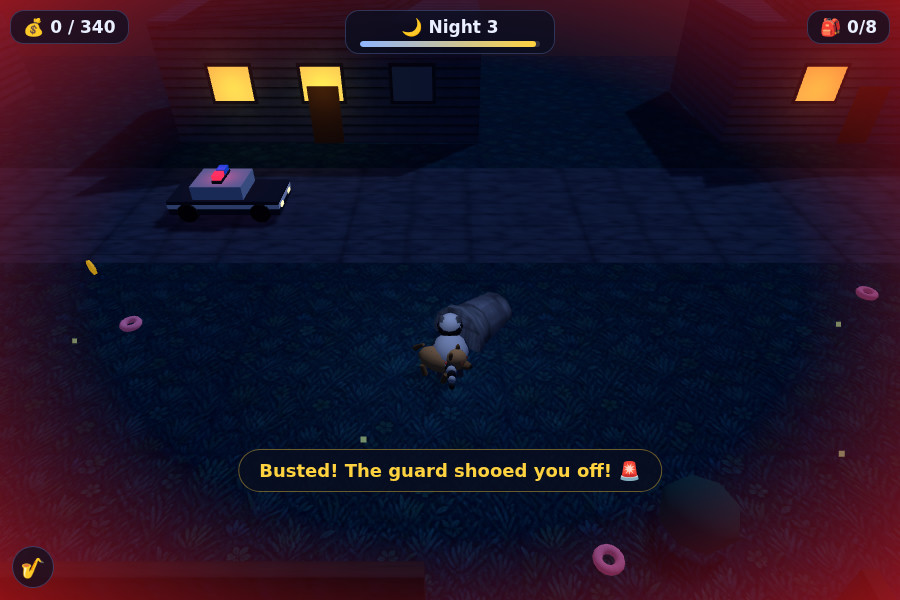
Back in 2022 I tweeted screenshots of a game concept generated by GPT-3 and some concept “art” created using DALL-E. Today, on the fourth anniversary of that tweet, I decided to see if Claude Fable 5 (running in Claude Code for web) could build the entire game from the content of that tweet. It did a pretty good job of it!
[... 3,479 words]2025
I am increasingly worried about AI in the video game space in general. [...] I'm not sure that the CEOs and the people making the decisions at these sorts of companies understand the difference between actual content and slop. [...]
It's exactly the same cryolab, it's exactly the same robot factory place on all of these different planets. It's like there's so much to explore and nothing to find. [...]
And what was in this contraband chest was a bunch of harvested organs. And I'm like, oh, wow. If this was an actual game that people cared about the making of, this would be something interesting - an interesting bit of environmental storytelling. [...] But it's not, because it's just a cold, heartless, procedurally generated slop. [...]
Like, the point of having a giant open world to explore isn't the size of the world or the amount of stuff in it. It's that all of that stuff, however much there is, was made by someone for a reason.
— Felix Nolan, TikTok about AI and procedural generation in video games
Game design is simple, actually (via) Game design legend Raph Koster (Ultima Online, Star Wars Galaxies and many more) provides a deeply informative and delightfully illustrated "twelve-step program for understanding game design."
You know it's going to be good when the first section starts by defining "fun".
My first games involved hand assembling machine code and turning graph paper characters into hex digits. Software progress has made that work as irrelevant as chariot wheel maintenance. [...]
AI tools will allow the best to reach even greater heights, while enabling smaller teams to accomplish more, and bring in some completely new creator demographics.
Yes, we will get to a world where you can get an interactive game (or novel, or movie) out of a prompt, but there will be far better exemplars of the medium still created by dedicated teams of passionate developers.
The world will be vastly wealthier in terms of the content available at any given cost.
Will there be more or less game developer jobs? That is an open question. It could go the way of farming, where labor saving technology allow a tiny fraction of the previous workforce to satisfy everyone, or it could be like social media, where creative entrepreneurship has flourished at many different scales. Regardless, “don’t use power tools because they take people’s jobs” is not a winning strategy.
Stimulation Clicker (via) Neal Agarwal just created the worst webpage. It's extraordinary. All of the audio was created specially for this project, so absolutely listen in to the true crime podcast and other delightfully weird little details.
Works best on a laptop - on mobile I ran into some bugs.
2024
“The Door Problem”. Delightful allegory from game designer Liz England showing how even the simplest sounding concepts in games - like a door - can raise dozens of design questions and create work for a huge variety of different roles.
- Can doors be locked and unlocked?
- What tells a player a door is locked and will open, as opposed to a door that they will never open?
- Does a player know how to unlock a door? Do they need a key? To hack a console? To solve a puzzle? To wait until a story moment passes?
[...]
Gameplay Programmer: “This door asset now opens and closes based on proximity to the player. It can also be locked and unlocked through script.”
AI Programmer: “Enemies and allies now know if a door is there and whether they can go through it.”
Network Programmer : “Do all the players need to see the door open at the same time?”
2023
I lost everything that made me love my job through Midjourney over night. A poster on r/blender describes how their job creating graphics for mobile games has switched from creating 3D models for rendering 2D art to prompting Midjourney v5 and cleaning up the results in Photoshop. “I am now able to create, rig and animate a character thats spit out from MJ in 2-3 days. Before, it took us several weeks in 3D. [...] I always was very sure I wouldn’t lose my job, because I produce slightly better quality. This advantage is gone, and so is my hope for using my own creative energy to create.”
2022
Building games and apps entirely through natural language using OpenAI’s code-davinci model. A deeply sophisticated example of using prompts to generate entire working JavaScript programs and games using the new code-davinci OpenAI model.
2021
The Digital Antiquarian: Sam and Max Hit the Road. Delightful history and retrospective review of 1993’s Sam and Max Hit the Road. I didn’t know Sam and Max happened because the independent comic’s creator worked for LucasArts and the duo had embedded themselves in LucasArts culture through their use in the internal educational materials prepared for SCUMM University.
2020
The secrets of Monkey Island’s source code (via) To celebrate the thirty year anniversary of the Secret of Monkey Island the Video Game History Foundation interviewed developer Rod Gilbert and produced this comprehensive collection of cut content and material showing how the game was originally constructed.
2017
Game developer’s guide to graphical projections (with video game examples), Part 1: Introduction. Absolutely delightful series of illustrated essays by Matej ‘Retro’ Jan explaining how different graphical projections can be used for video game art. Each concept is illustrated by screenshots or gifs from a mixture of games spanning four decades. Reading this was a real treat.
Return of the Obra Dinn: Dithering Process (via) Lucas Pope (creator of “Papers, Please”) has a new game under development: “Return of the Obra Dinn”, a first-person adventure mystery game set in 1807 that is spectacularly rendered in a 1-bit art style. He has a development diary on tigsource.com, and in this entry he describes the extreme lengths he has gone to in order to develop the best possible dithering implementation for rendering his 3D world in 1-bit colour. “It feels a little weird to put 100 hours into something that won’t be noticed by its absence.”
2010
Tuning Canabalt. Fascinating insight in to the game parameter tuning needed to make a game feel just right.
The Pac-Man Dossier. Exuberantly detailed. Everything from how collision detection works to the exact pathfinding and target selection algorithms used by the four different ghosts. There’s even a tutorial for playing the legendary 256th level, where an overflow bug corrupts one half of the screen.
Lou’s Pseudo 3d Page. Spectacularly detailed exploration of the road graphics used in racing games prior to true 3D. This is a potential gold mine for anyone looking for a fun project to try out with canvas. Bonus points for comet integration—I’m still looking forward to the first real-time multiplayer game in the browser using comet and canvas.
2008
Just One More Grim Thing (via) Tim Schafer releases 72 pages of design documentation for Grim Fandango, my all-time favourite computer game.
Update 18th Feb 2025: That blog entry is no longer available, but Gameshelf preserved a copy of the PDF.
Walk, Don’t Run (via) A retrospective look at Grim Fandango (possibly my favourite game of all time) and the fan community that are keeping it alive, nearly a decade after it was first released.
Core Techniques and Algorithms in Game Programming. Scarily detailed online book on games programming, including 2D and 3D graphics, AI, multiplayer network code, indoor and outdoor rendering, character animation and much more. UPDATE: Removed the original link, which appeared to be a pirated copy.
2007
The arc of TF2 is something that's probably familiar to a lot of amateur developers or designers. When we got here the first thing we built was overly complex, very hard core, almost impenetrable to anyone who wasn't familiar with FPSs in general. And as we found as we played it, wasn't more fun because of it.
2004
Game Studies (via) “... a crossdisciplinary journal dedicated to games research ...”